
SEO Website Design: Everything You Need to Know to Build a Search-Engine Optimized Website
Introduction
SEO website design is not about making a website “look good for Google”. It is about designing a website in a way that search engines can easily crawl, understand, and rank – while real uses can navigate, trust and engage with it.
Many website fail at SEO not because of bad content, but because the design works against search engines. Poor structure, confusing navigation, slow templates, and design-first decisions often limit ranking potential before SEO even begins.
In this guide, we’ll break down what SEO website design actually means, why it matters, and how to build a website that supports SEO from day one instead of trying to fix problems later.
100 Words or Less: Content Syndication explained
SEO website design is the practice of designing a website with search engine performance in mind from the start. It focuses on structure, usability, mobile responsiveness, crawlability, and technical foundations that help search engines understand and rank a site. Instead of adding SEO after launch, SEO website design builds optimization directly into layouts, templates, and navigation. The result is a site that performs better, scales easier, and avoids costly redesigns later.
What is SEO Website Design?
SEO website design is the process of designing a website so that SEO requirements are built directly into its structure, templates, and user experience. It goes far beyond visual design and includes how pages are organized, internally linked, coded, and accessed by search engines.
Traditional web design often prioritizes aesthetics first and treats SEO as a post-launch task. SEO website design reverses that approach by ensuring search engines can crawl, index, and understand the site efficiently before visual elements are finalized. As outlined in Google’s SEO Starter Guide, clear structure and accessibility are foundational to how search engines evaluate websites.
When design and SEO work together from the beginning, the website becomes easier to optimize, easier to scale, and far more sustainable long term.
Why SEO Website Design Matters for Rankings
Search engines rely on clear structure and signals to evaluate websites. If your design blocks crawlers, hides important content, or creates unnecessary complexity, rankings suffer regardless of content quality.
Good SEO Website design improves crawlability and indexability, making it easier for search engines to discover and prioritize important pages. it also supports better user experience, which indirectly affects rankings through engagement, navigation clarity, and overall site usability.
SEO problems caused by poor design are often expensive to fix later. Designing with SEO in mind prevents those issues before they impact traffic.
Core Elements of SEO Website Design
Site Structure & Architecture
A clear site structure helps search engines understand how your pages relate to each other. Pages should follow a logical hierarchy, with important content closer to the homepage and supporting pages nested appropriately.
Clean URLs, consistent folder structures, and intentional internal linking make it easier for crawlers to navigate your site. When structure is messy, link equity is diluted and important pages struggle to rank.
Mobile-First & Responsive Design
Search engines index the mobile version of websites first, which makes mobile-friendly design non-negotiable. A responsive layout ensures your content adapts to all screen sizes without hiding or altering key elements.
SEO website design prioritizes mobile usability from the start. Navigation, font sizes, spacing, and interactive elements must work seamlessly on smaller screens to avoid engagement and ranking issues.
UX Design That Supports SEO
User experience and SEO are closely connected. If users can’t find information quickly or feel confused navigating your site, they leave — sending negative signals to search engines.
SEO-friendly UX focuses on clarity, predictable navigation, readable layouts, and intuitive page flows. Design should guide users naturally to relevant content without overwhelming them or burying key pages.
Technical SEO Built Into Design
SEO website design includes clean, semantic HTML that helps search engines understand page content and hierarchy. Templates should use proper heading structures, consistent layouts, and accessible elements.
Technical foundations like lightweight templates, reusable components, and standardized page types make ongoing SEO easier. While advanced features like schema markup matter, they should complement — not compensate for — poor design decisions.
SEO Website Design vs. SEO After Launch
Designing a website first and “adding SEO later” often creates unnecessary limitations. Structural problems, page templates, and navigation choices can restrict what SEO can realistically fix.
SEO website design avoids rework by integrating optimization into the design phase. This approach saves time, reduces technical debt, and allows SEO efforts to focus on growth instead of damage control.
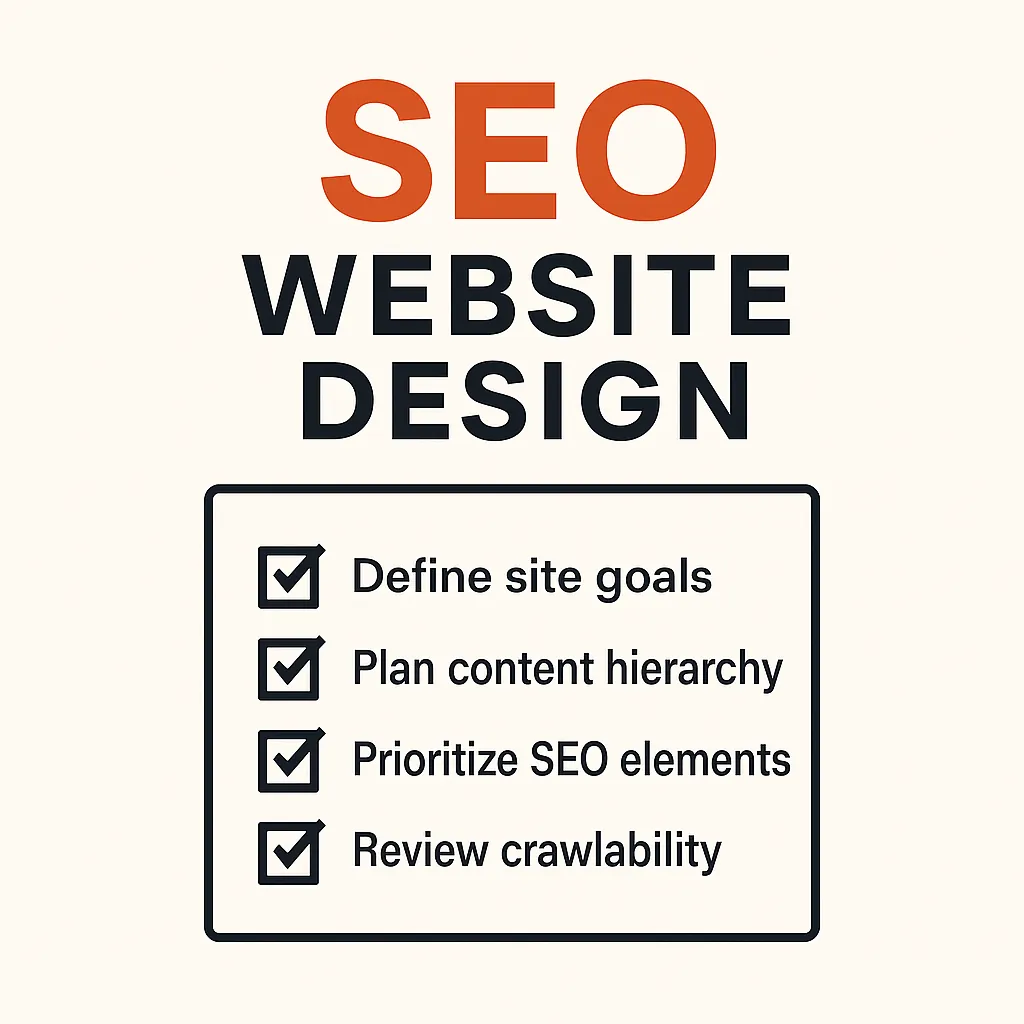
SEO Website Design Checklist
Before Design Begins:
- Define clear business and SEO goals for the website
- Map out the content hierarchy and page priorities
- Identify primary and supporting pages that must be crawlable and indexable
- Align SEO requirements with design and development teams early
During the Design Phase:
- Ensure page templates support clean, readable URL structures
- Design for mobile-first and responsive behavior across devices
- Plan internal linking paths within navigation and page layouts
- Avoid design elements that hide or block important content
Before Launch:
- Review crawlability and indexability of all key pages
- Validate page structure, headings, and template consistency
- Check technical basics such as redirects, broken links, and accessibility
Using this checklist will help you prevent missed steps and ensure SEO fundamentals are built from the start. Even small design decisions can create long-term SEO issues if they’re overlooked early in the process.
Example: Designing an SEO-First Website
Consider a service-based business rebuilding its website to generate consistent organic leads. Instead of starting with visual mockups, the project begins with SEO-driven planning. Core service pages are identified first, followed by supporting content that answers related user questions and strengthens topical relevance.
The site architecture is designed so each service page sits close to the homepage and is supported by relevant subpages and internal links. Navigation is kept simple, URLs are structured logically, and page templates are standardized to ensure headings, content placement, and internal links are consistent across the site.
Mobile usability is addressed early, with layouts built for smaller screens first and enhanced for desktop. Technical SEO requirements such as crawlable menus, clean HTML, and lightweight templates are baked into the design instead of added later.
Because SEO website design guides every decision, the website launches with fewer technical issues, pages are indexed and ranked faster, and future content additions fit naturally into the existing structure. This approach makes ongoing SEO easier and allows the site to scale without needing costly redesigns or structural fixes.
How We Approach SEO Website Design at Quantum SEO Strategy
At Quantum SEO Strategy, we approach SEO website design as a planning and architecture discipline first, not a visual exercise. Before design decisions are finalized, we focus on site structure, page hierarchy, internal linking logic, and technical requirements that directly affect crawlability, indexability, and long-term scalability — all core components of effective SEO services.
Our process aligns SEO, UX, and development considerations early so design choices support, rather than limit, search performance. Page templates are structured to support content growth, mobile usability is treated as a baseline requirement, and technical SEO fundamentals are addressed during the design phase instead of being patched after launch.
By integrating SEO into the design process, we reduce the need for corrective fixes later and make ongoing optimization more efficient. The result is a website that launches with a solid search foundation and remains flexible as SEO strategies evolve over time.
Frequently Asked Questions (FAQ)
What is SEO website design?
SEO website design is the practice of designing a website so search engines can easily crawl, understand, and rank its pages. It focuses on structure, usability, mobile responsiveness, and technical foundations rather than visual design alone.
What makes a website SEO friendly?
A website is SEO friendly when it has a clear structure, clean URLs, mobile-friendly design, fast-loading templates, and accessible content. These elements help search engines index pages correctly and improve user experience at the same time.
How can I make my website SEO friend?
You can make your website SEO friendly by planning site structure before design, using responsive layouts, creating clear navigation, and ensuring pages are crawlable and indexable. SEO works best when these decisions are made early rather than added after launch.
Why is SEO important for a website?
SEO is important because it helps search engines discover, understand, and rank your website for relevant searches. Without SEO-friendly design and structure, even high-quality content can struggle to generate consistent organic traffic.
Does Website design affect SEO?
Yes, website design directly affects SEO through site structure, navigation, mobile usability, and page accessibility. Poor design choices can block crawlers, confuse users, and limit ranking potential regardless of content quality.
When should SEO be considered in website design?
SEO should be considered before design begins, during planning and wireframing stages. Early SEO involvement prevents structural problems that are difficult and expensive to fix after a website goes live.
What website builder is best for SEO?
There is no single “best” website builder for SEO, but platforms like WordPress perform well when structured correctly. SEO success depends more on how the site is designed, built, and optimized than on the platform itself.
Conclusion
SEO website design sets the foundation for everything that follows. When SEO is considered from the start, websites rank more consistently, scale more easily, and avoid common technical pitfalls.
Instead of fixing SEO problems after launch, the smarter approach is to design for SEO from day one. A search-optimized website isn’t just easier to rank — it’s easier to grow.