
Medical SEO Strategy: How Doctors and Clinics Can Attract More Patients
Introduction
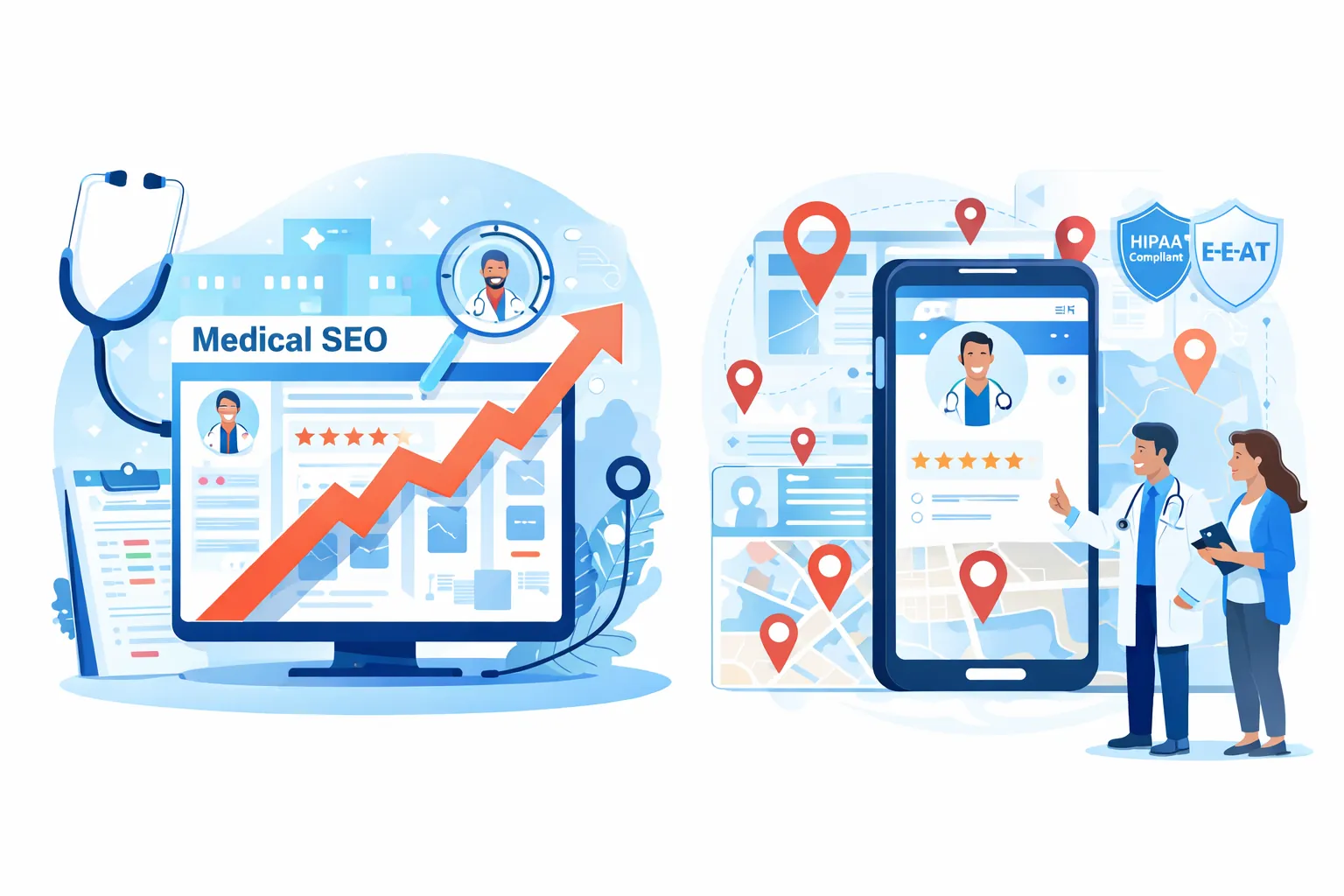
Medical SEO has become one of the most reliable growth channels for doctors and clinics that want consistent patient footfall – not just short-term visibility. Today’s patients don’t rely solely on referrals. They search Google to evaluate symptoms, compare providers, read reviews and decide who to trust before ever making a call.
This shift has changed how medical practices grow. Practices that treat SEO as a long-term strategy build sustainable visibility, trust and patient pipelines. Those that don’t often struggle with stagnant growth, rising ad costs or dependence on third-party platforms.
This guide focuses on medical SEO as a growth system, not a checklist. We’ll break down how medical SEO works, how it attracts qualified patients, and how doctors and clinics can build an SEO strategy that scales – while staying compliant and credible in a highly regulated industry.
Medical SEO in 100 Words or Less
Medical SEO is the process of optimizing a medical practice’s online presence to attract more patients through organic search. Unlike general SEO, it prioritizes trust, compliance, local visibility and healthcare specific search intent. A strong medical SEO strategy aligns content, website structure, local SEO and authority signals to help doctors and clinics rank for high-intent searches and convert that visibility into appointments. When done correctly, medical SEO becomes a long-term growth asset rather than a short-term marketing expense.
What Medical SEO Really Means in Healthcare
Medical SEO is not just “regular SEO for doctors”. Healthcare is a high-trust, high-risk category, which means search engines evaluate medical websites differently than most industries.
Medical SEO focuses on:
- Accuracy and clarity of information
- Trustworthiness and authority (E-E-A-T)
- Patient-first content, not promotional copy
- Compliance-aware optimization
Search engines want to ensure that medical content is written to inform – not mislead. That’s why most medical SEO places heavier emphasis on content quality, author credibility, transparent business information and real-world trust signals.
For doctors and clinics, this means SEO isn’t about chasing algorithms – it’s about building digital credibility that mirrors real-world expertise.
How Medical SEO Drives Patient Growth
Medical SEO drives growth by aligning with how patients actually search.
Most patient journeys start with:
- Symptoms
- Conditions
- Treatments
- Provider comparisons
When your practice appears at the right moment – answering the right questions – you become part of the decision-making process before a patient ever contacts you.
Medical SEO marketing works because it:
- Attracts patients with active intent
- Builds trust before first contact
- Reduces dependence on paid ads
- Creates compounding traffic over time
Unlike ads, SEO doesn’t stop when you pause spending. The visibility you build continues to work for your practice long after content is published.
Building a Medical SEO Strategy That Scales
A scalable medical SEO strategy focuses on systems, not isolated tactics.
Keyword Strategy for Medical Practices
Effective medical keywords research starts with understanding patient intent:
- Informational (symptoms, conditions)
- Commercial (treatments, providers)
- Local (near me, city-based searches)
The goal is not to rank for everything – it’s to rank for searches that lead to real patient actions. High-volume keywords matter less than relevance and conversion potential.
Content Strategy That Builds Trust
Medical content should educate first and convert second. Pages that clearly explain conditions, treatments and outcomes tend to outperform purely emotional content.
Strong medical content:
- Uses plain language (remember your patients are not doctors)
- Answers real patient questions
- Demonstrates expertise without exaggeration
- Supports E-E-A-T principles
This approach builds trust with both patients and search engines.
Medical Website Optimization That Converts Patients
Medical website optimization is where SEO and patient experience intersect.
A high-performing medical website includes:
- Fast load times and mobile optimization
- Clear service structure and navigation
- Transparent provider information
- Easy appointments path
Search engines reward sites that users trust and engage with. Patients reward sites that feel credible, easy to use and informative.
Medical website SEO isn’t just about rankings – it’s about removing friction between discovery and appointment booking.
Local SEO for Doctors and Clinics
For most practices, local SEO is the primary growth lever.
Local medical SEO focuses on:
- Google Business Profile optimization
- Accurate NAP (name, address, phone) data
- Reviews and reputation signals
- Location-specific content
Local SEO ensures your practice appears when patients search for care in their area. Even highly specialized practices benefit from local visibility because proximity still influences patient choice.
Compliance, Trust & E-E-A-T in Medical SEO
Medical SEO must operate within strict trust boundaries.
HIPAA does not prevent SEO – but it does shape how content and data are handled. Patient privacy must never be compromised, and testimonials or case studies must be presented carefully.
E-E-A-T plays a critical role:
- Experience: real-world medical insight
- Expertise: qualified authorship
- Authoritativeness: reputation and citations
- Trustworthiness: transparency and accuracy
Search engines are cautious with medical content. Practices that demonstrate credibility consistently outperform those that don’t.
Common Medical SEO Mistakes That Limit Growth
Some of the most common growth-limiting mistakes include:
- Over-optimizing service pages with keywords
- Publishing thin or generic content
- Ignoring local search intent
- Focusing on rankings instead of patient outcomes
Medical SEO works best when strategy is aligned with patient needs – not shortcuts.
Example: A Growth-Focused Medical SEO Framework
Imagine a multi-location clinic relying heavily on paid ads. After implementing a medical SEO framework focused on educational content, local SEO and website optimization, organic traffic becomes the primary patient acquisition channel.
The result isn’t instant – but it’s sustainable. SEO compounds over time, reducing cost per patient while increasing visibility and trust.
Frequently Asked Questions (FAQ)
What is medical SEO, and how is it different from regular SEO?
Medical SEO prioritizes trust, accuracy, and compliance. Search engines apply stricter quality standards to healthcare content, making credibility essential.
How does medical SEO help doctors and clinics get more patients?
It aligns your presence with patient search behavior, attracting high-intent traffic that is more likely to convert into appointments.
Is medical SEO compliant with HIPAA and healthcare regulations?
Yes. Medical SEO focuses on public-facing optimization and avoids handling protected health information.
How long does Medical SEO take to show results?
Most practices see early movement within the first 6 months with stronger growth over 6-12 months.
What should a high-performing medical website include for SEO?
Clear services, educational content, fast performance and trust signals all play a role.
Should medical practices focus on local SEO or national SEO?
Most practices benefit most from local SEO, while specialty clinics may layer in national visibility
Final Thoughts – Turning Medical SEO into a Growth Asset
Medical SEO works best when treated as a long-term investment. It’s not about chasing algorithms – it’s about building visibility, trust and authority in a way that mirrors real-world medical expertise.
For doctors and clinics focused on growth, medical SEO becomes more than marketing. It becomes a scalable system for attracting the right patients – consistently and sustainably.