What Is SEO Traffic? How It Works and How to Increase It
Introduction
SEO traffic is one of the most misunderstood concepts in digital marketing. Many people chase rankings, impressions, or raw traffic numbers without understanding how SEO traffic actually works – or what makes it valuable.
In this guide we’ll break down SEO traffic from the ground up. You’ll learn what it is, how it’s generated, where it comes from, how to increase it sustainably and how to measure it correctly – without falling for common myths or shortcuts that hurt long-term growth.
100 Words or Less: Summary
SEO traffic refers to visitors who land on your website from unpaid search engine results. It’s driven by search-intent, keyword demand, rankings and click-through behavior – not just visibility alone. This guide explains how SEO traffic works, where it comes from, how it grows organically, which metrics matter and why tactics like buying traffic or chasing vanity metrics often fail. If your goal is sustainable, high-quality website traffic that converts, understanding SEO traffic is essential.
What Is SEO Traffic?
SEO traffic is the traffic your website receives from organic (non-paid) search results on search engines like Google, Bing, Yahoo etc. when someone searches for a query and clicks your page without an ad being involved, that visit counts as SEO traffic.
In simple terms, SEO traffic is the result of:
- Search demand
- Your site’s visibility in search results
- A user choosing your listing over others
It’s not just about ranking – it’s about matching search intent and earning the click.
How SEO Traffic Is Different from Other Traffic
SEO traffic differs from other traffic sources in a few key ways:
- Paid traffic comes from ads and stops when you stop paying
- Referral traffic comes from links on other websites
- Direct traffic comes from users typing your URL directly
SEO traffic is unique because it compounds over time. Strong pages can generate organic traffic for months or years with ongoing optimization instead of ongoing ad spend.
How SEO Actually Drives Traffic
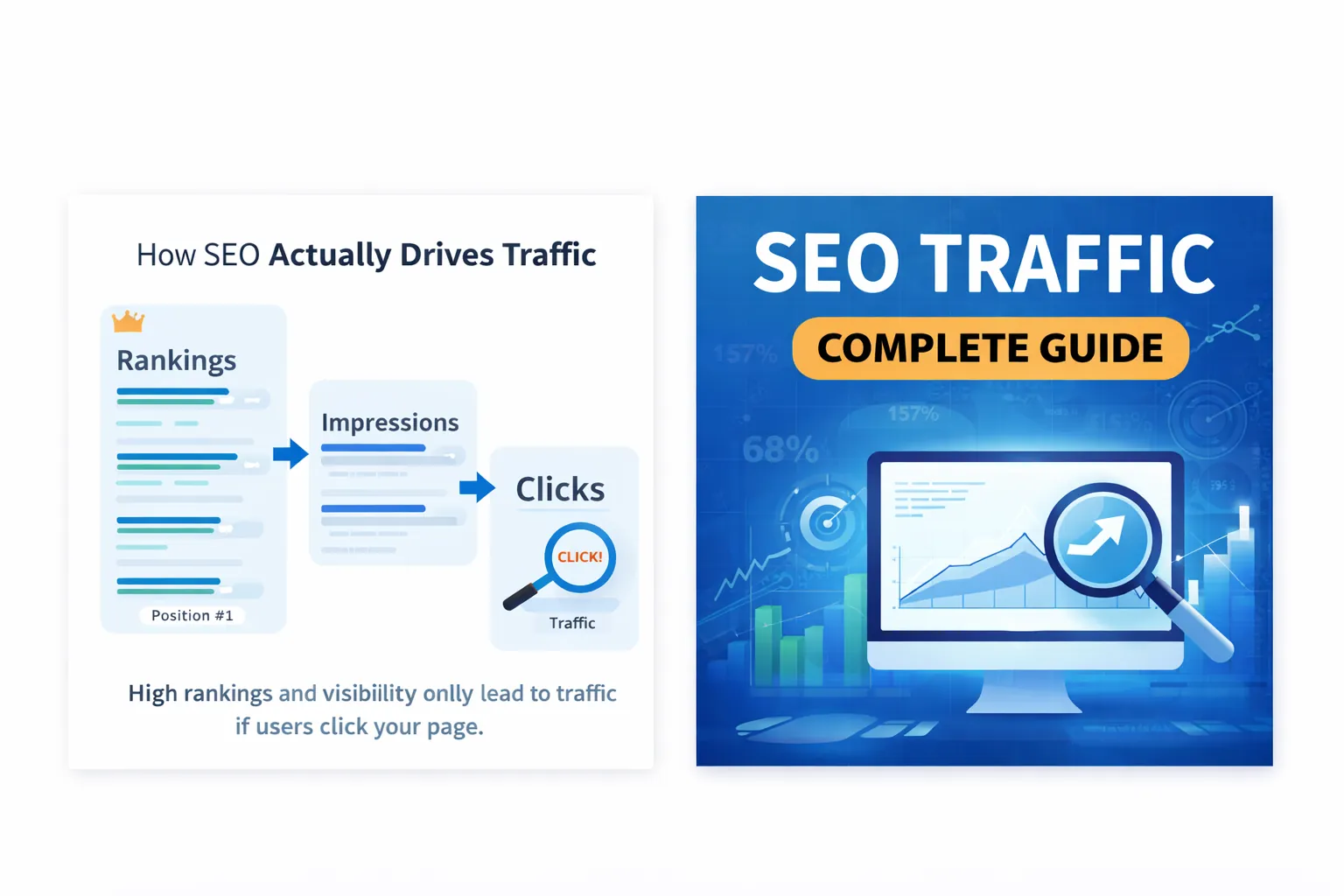
SEO doesn’t magically send traffic to your site. There’s a clear process behind it:
- Your page ranks for relevant keywords
- It appears as an impression in search results
- Users decide whether to click
Traffic happens only when all three align.
Rankings, Impressions and Clicks
A common mistake is assuming rankings equal traffic. They don’t!
- Rankings determine visibility
- Impressions show how often your page appears
- Clicks create traffic
Click-through rate (CTR) bridges the gap. Even a top-ranking page can get low traffic if the title, description or intent mismatch discourage clicks.
Why Visibility Doesn’t Always Equal Traffic
High visibility doesn’t guarantee meaningful traffic. If your page ranks for broad or mismatched queries, users may click – but leave quickly or never convert.
SEO traffic quality matters more than volume. The goal is attracting the right users, not just more users.
Main Sources of SEO Traffic
SEO traffic comes from multiple types of search behavior, not just one.
Branded vs Non-Branded Search Traffic
Non-branded SEO traffic usually drives growth, while branded traffic reflects brand awareness and trust
Information vs Commercial Search Traffic
Informational traffic helps educate users early. Commercial traffic signals buying intent. Both matter – but they serve different roles in your funnel.
Strong SEO strategies balance both to support traffic and conversions.
How to Increase SEO Traffic (Step-by-Step)
Growing SEO traffic isn’t about hacks. It’s about alignment.
Keyword Strategy That Actually Drives Traffic
Effective SEO traffic growth starts with:
- Targeting keywords people actually search
- Matching search intent , not just volume
- Avoiding keywords dominated by ads or SERP features
Ranking for low-demand keywords wont’ move traffic – even if rankings look good.
Content Optimization for Traffic (Not Just Rankings)
Content optimized for traffic:
- Answers the queries clearly
- Matches the format users expect
- Uses headings that improve scanability
- Encourages clicks from SERP
Optimization isn’t stuffing keywords – it’s improving usefulness.
Technical & UX Factors That Impact Traffic
Slow load times, poor mobile experience and confusing layouts reduce SEO traffic even when rankings are strong. Technical SEO and UX directly influence clicks, engagement and long-term visibility.
SEO Traffic Metrics That Matter (and Ones That Don’t)
Not all metrics are equal.
Metrics You Should Track
Focus on:
- Organic sessions
- Click-through rates (CTR)
- Engagement metrics
- Conversion from SEO traffic
These show whether traffic is useful, not just present.
Vanity Metrics to Ignore
Metrics like impressions or average position can be helpful – but only in context. On their own, they don’t indicate success.
Organic SEO Traffic vs Paid Traffic
Paid traffic offers speed. SEO traffic offers sustainability.
Paid ads stop when budgets stop. SEO traffic compounds and often delivers trust and better long-term ROI when done correctly.
Why Buying SEO Traffic is a Bad Idea
Buying traffic doesn’t improve rankings, engagement or conversion. In many cases, it inflates numbers without creating real business value – and can even harm your site if traffic quality is poor.
SEO traffic must be earned, not manufactured.
Organic SEO Traffic vs Paid Traffic
Paid traffic offers speed. SEO traffic offers sustainability.
Paid ads stop when budgets stop. SEO traffic compounds and often delivers trust and better long-term ROI when done correctly.
Common SEO Traffic Mistakes
Common mistakes include:
- Chasing rankings instead of intent
- Measuring the wrong metrics
- Ignoring CTR and UX
- Focusing on volume over quality
Avoiding these mistakes is often enough to unlock growth.
Frequently Asked Questions (FAQ)
Does SEO increase website traffic?
Yes – when your pages rank for searches people actually type, SEO can drive consistent website traffic without paying per click. The real win is that strong pages can keep bringing visitors month after month if they match search intent.
How does SEO increase traffic?
SEO increases traffic by improving your visibility for relevant queries, which lead to more impressions and (if your snippet earns the click) more visits. Rankings matter, but so do CTR, relevance and whether your page actually answer what the searchers want.
How to increase SEO traffic?
Start with keyword + intent alignment, then publish or improve content that fully answers the query in the format users expect. After that, improve titles / meta for CTR, strengthen internal linking and fix technical / UX issues that cause people to bounce.
How to increase organic traffic with SEO
Focus on building topical coverage (not just one-off posts), updating key pages to stay current, and earning trust signals (links, mentions, strong engagement). Organic traffic grows fastest when you create content clusters that make your site the obvious “best answer” for a topic.
How much can SEO increase traffic?
It depends on your niche, current baseline, and how much search demand exists for the topics you can realistically win. Some sites see modest growth (10–30%) from optimization alone, while others can multiply traffic by targeting better keywords and building a stronger content system.
Will domain migration increase SEO traffic?
A domain migration doesn’t increase SEO traffic by itself—done wrong, it can reduce traffic fast. If it’s planned properly (clean redirects, preserved URL structure where possible, updated internal links, and correct indexing signals), you can maintain traffic and sometimes improve performance over time.
Conclusion – Stop Chasing Traffic, Start Building It
SEO traffic isn’t about chasing algorithms or shortcuts. It’s about understanding search behavior, aligning with user intent and building p ages that deserve clicks.
When done correctly, SEO traffic becomes one of the most reliable, scalable sources of growth for your website – without relying on ads or constant spend.